The short answer: make Seoul your first base, then add one destination that changes the character of the trip: Busan for a coastal city, Gyeongju for concentrated history, or Jeju for volcanic landscapes. With more time, add Suwon, the Paju DMZ, Sokcho and Seoraksan, Jeonju, Gangneung, or Suncheon and Yeosu because they match a specific interest—not because a “top 10” says you must collect them all.

Evidence checked July 21, 2026
The finalized 2025 Foreign Tourist Survey reported Seoul on 76.8% of visited-region responses, followed by Busan at 15.7% and Jeju at 9.7%. It also found strong participation in food tourism, shopping, natural scenery, and historic sites. Those figures are context—not a ranking of the ten places below—because the survey mixes metropolitan cities, provinces, and multiple responses. The shortlist also checks every featured attraction against the current official 100 Must-Visit Tourist Spots of Korea.
How to use this guide: choose one primary base, one contrasting second stop, and at most one optional add-on for a seven- to ten-day trip. Suggested stays are editorial planning ranges, not official minimums. Weather, mobility, arrival time and transport connections can justify a slower plan.
The ten-place shortlist at a glance
| Place | Choose it for | Suggested stay | Main tradeoff |
|---|---|---|---|
| Seoul | Palaces, neighborhoods, food, shopping and K-culture | 4–5 nights | A huge city; grouping days by area matters |
| Busan | Urban beaches, seafood markets and coastal views | 2–3 nights | Main sights are spread across several districts |
| Gyeongju | Silla history, tombs, temples and evening heritage walks | 1–2 nights | The KTX station is outside the historic center |
| Jeju | Volcanic scenery, coastal walks and a slower island trip | 3–5 nights | No KTX; attractions are far apart |
| Suwon | A practical UNESCO fortress day trip | 1 day | Suwon Station is not the fortress entrance |
| Paju DMZ | Modern history and the divided peninsula | 1 day | Access, identification and tour routes can change |
| Sokcho & Seoraksan | Mountain scenery, hiking and an East Coast market | 1–2 nights | Trail and cable-car conditions are weather-sensitive |
| Jeonju | Hanok streets, regional food and traditional culture | 1–2 nights | A rushed day trip misses the evening atmosphere |
| Gangneung | An easy East Coast rail break, beaches and coffee | 1–2 nights | It overlaps with Sokcho in a short itinerary |
| Suncheon & Yeosu | Wetlands, gardens and the southern coast | 2–3 nights | They are two cities, not one compact stop |
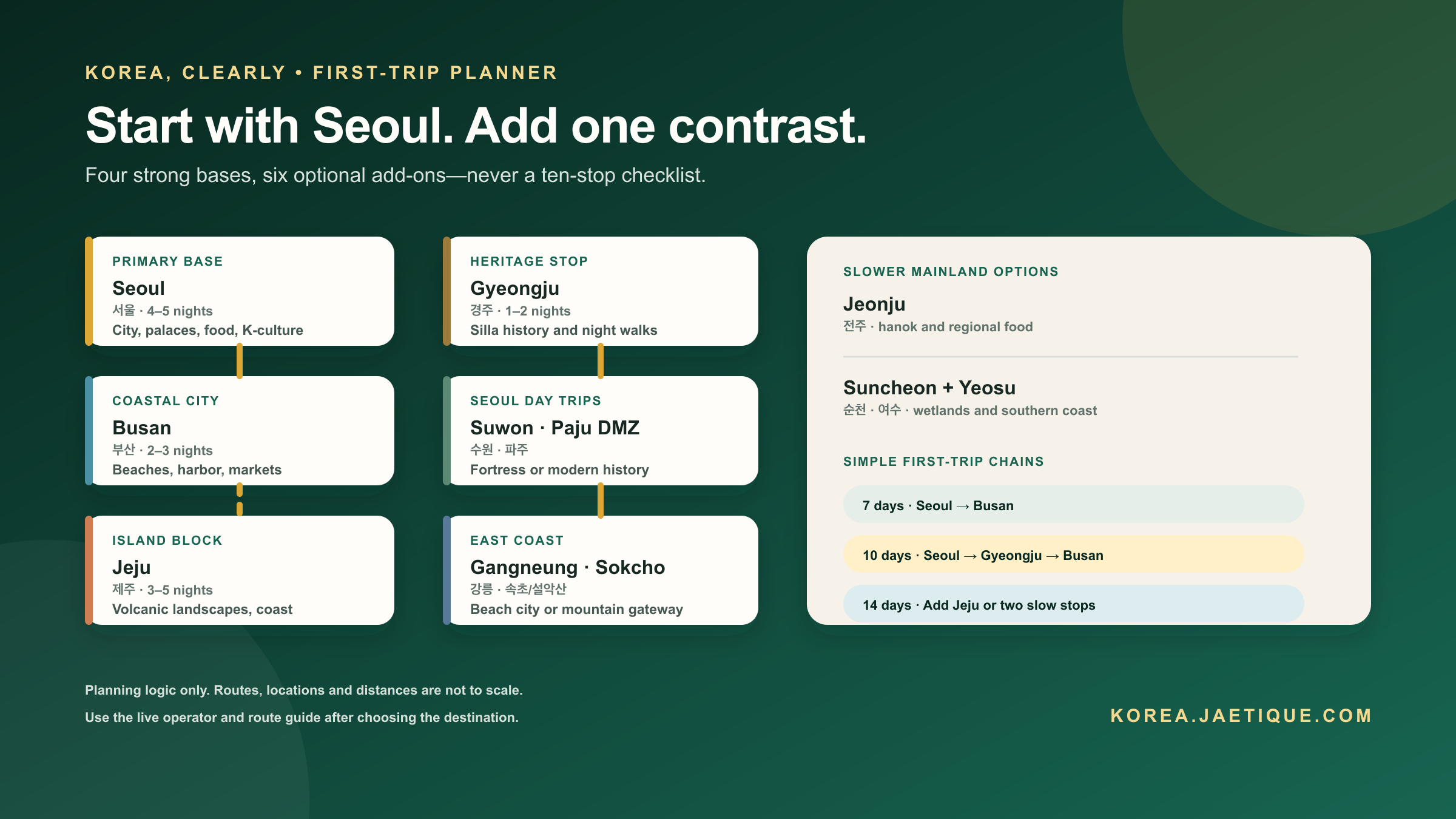
Start with four strong first-trip bases
1. Seoul: the essential first base
Best for: first-time visitors who want the widest mix of royal history, contemporary neighborhoods, food, shopping, museums and nightlife.
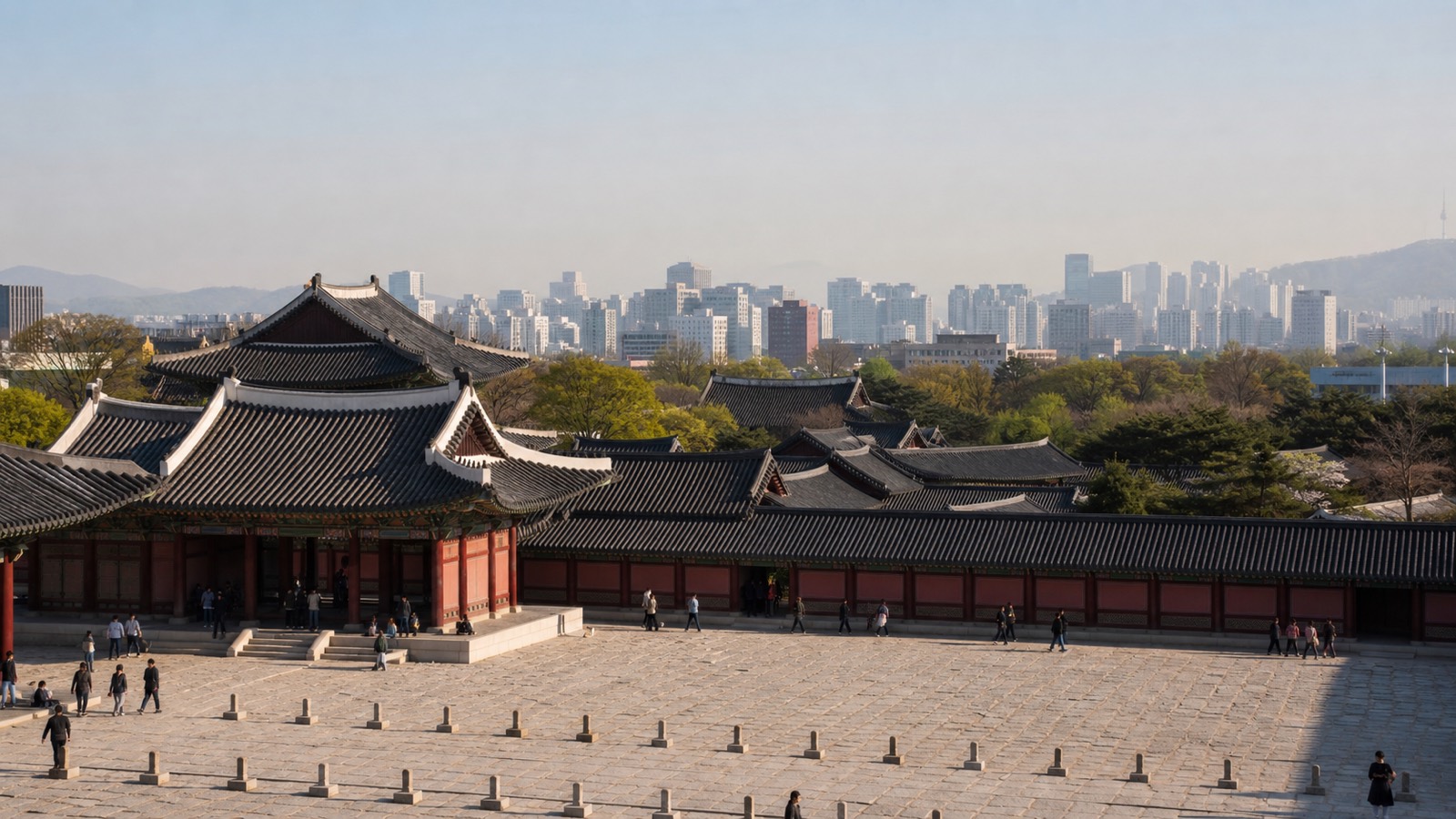
Seoul is not one attraction district. A useful first visit combines three different kinds of area:
- Historic center: Gyeongbokgung or Changdeokgung, then Insadong or Seochon.
- Shopping and food: Myeongdong, a traditional market, or the department-store districts.
- Contemporary Seoul: choose Hongdae, Seongsu, Gangnam or the Hangang area according to your interests instead of crossing the city for every trend.
Four or five nights let a first-time visitor recover from the flight and organize days by geography. If the whole trip is five days, staying in Seoul and adding one nearby day trip is usually more rewarding than spending every second day checking in and out.
If a Jamsil theme-park day is one of those priorities, separate admission from the optional queue product and read the Lotte World Magic Pass buying guide before building the day around limited inventory.
Already know your arrival neighborhood? Continue with the step-by-step routes from Incheon Airport to Myeongdong or Incheon Airport to Hongdae.
2. Busan: the strongest city-and-coast contrast
Best for: travelers who still want a major city but want beaches, coastal walks, seafood and a noticeably different rhythm from Seoul.
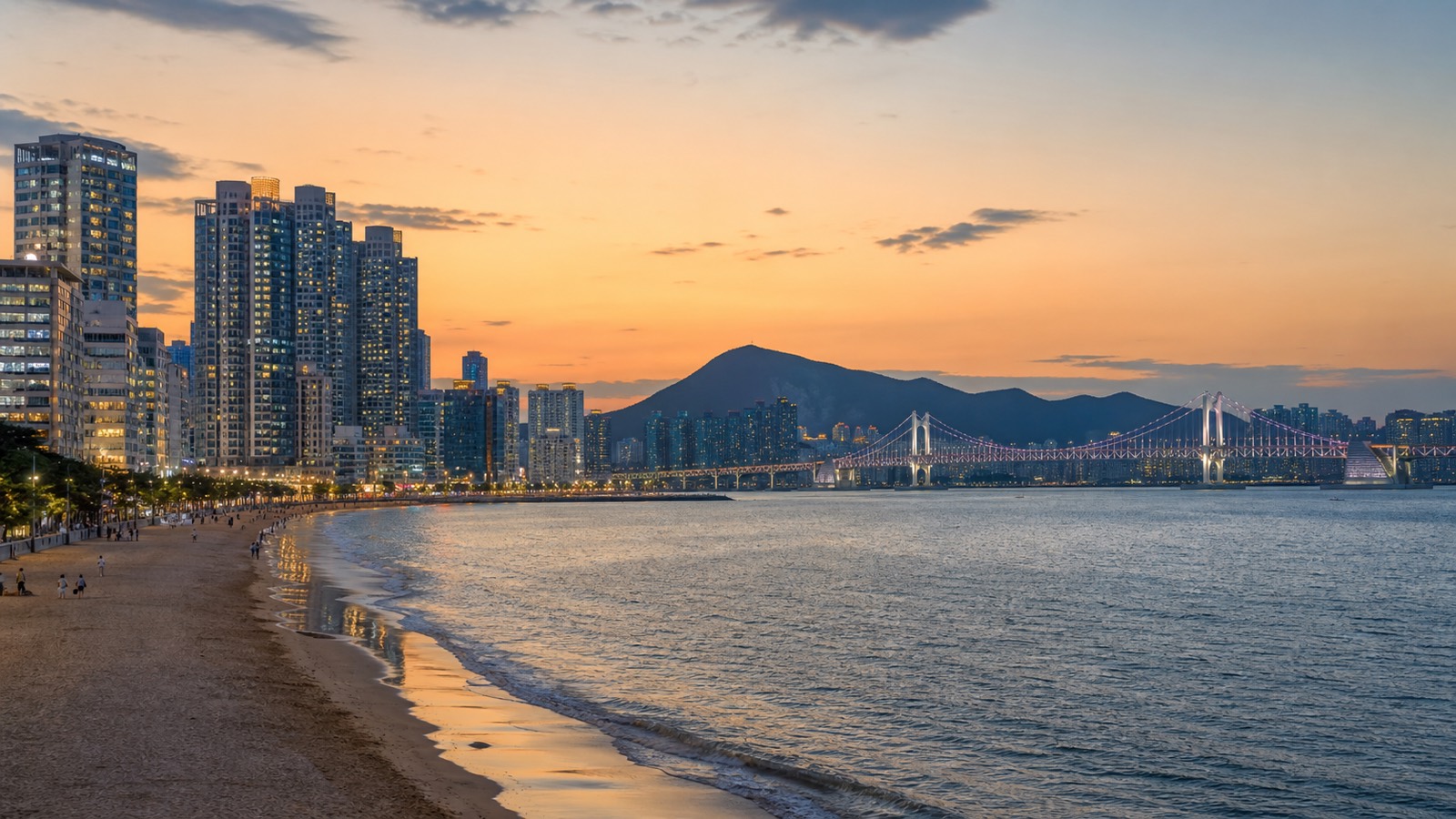
Busan works best when you choose two geographic zones rather than a checklist scattered across the city:
- East coast: Haeundae, Gwangalli, Songjeong or a coastal walking route.
- Old center and harbor: Nampo, Jagalchi, Yeongdo or Gamcheon.
Two nights can cover one coastal area and one market or harbor area. Three nights reduce long cross-city travel and leave room for weather. The official national shortlist includes Gamcheon Culture Village, Gwangalli, Taejongdae, Haedong Yonggungsa and the Haeundae–Songjeong coast, while Visit Busan provides the current local planning information.
For the train and final metro handoff, use the Incheon Airport or Seoul to Busan route guide.
3. Gyeongju: the concentrated heritage stop
Best for: travelers whose Korea interest includes dynastic history, archaeology, temples and illuminated heritage sites.

The central group around Daereungwon, Hwangnidan-gil, Cheomseongdae, Donggung and Wolji, and Woljeonggyo Bridge makes a coherent first day. Bulguksa and Seokguram require a separate transport block. One overnight lets you see the center after day-trippers leave; two nights make it easier to add the temple area without rushing.
The main practical trap is the station. The current KTX station is Gyeongju Station, 경주역, formerly called Singyeongju, and it is outside the central heritage zone. Read the complete Gyeongju arrival guide before choosing a train and hotel.
4. Jeju: the landscape trip that needs its own block of time
Best for: travelers who want volcanic terrain, coastal trails, forests, sunrise views and a slower break from large cities.

Jeju is a province and island, not one compact resort town. Choose a lodging base after mapping the actual priorities:
- Jeju City and north: easiest for the airport and a short arrival or departure day.
- Seogwipo and south: useful for southern waterfalls, resorts and parts of the Olle network.
- East: strongest when Seongsan Ilchulbong, Udo or eastern coast stops lead the plan.
Three nights is a practical lower planning range for most first visits; four or five gives weather flexibility and reduces island-wide backtracking. The official shortlist includes Seongsan Ilchulbong, Udo, Jeju Olle Trail, Hallasan and Bijarim Forest. Check current conditions through Visit Jeju, then use the Seoul or Incheon-to-Jeju transfer guide.
If you are choosing only among Busan, Gyeongju and Jeju, the focused three-destination comparison goes deeper without repeating this national shortlist.
Add one of these six only when it fits the trip
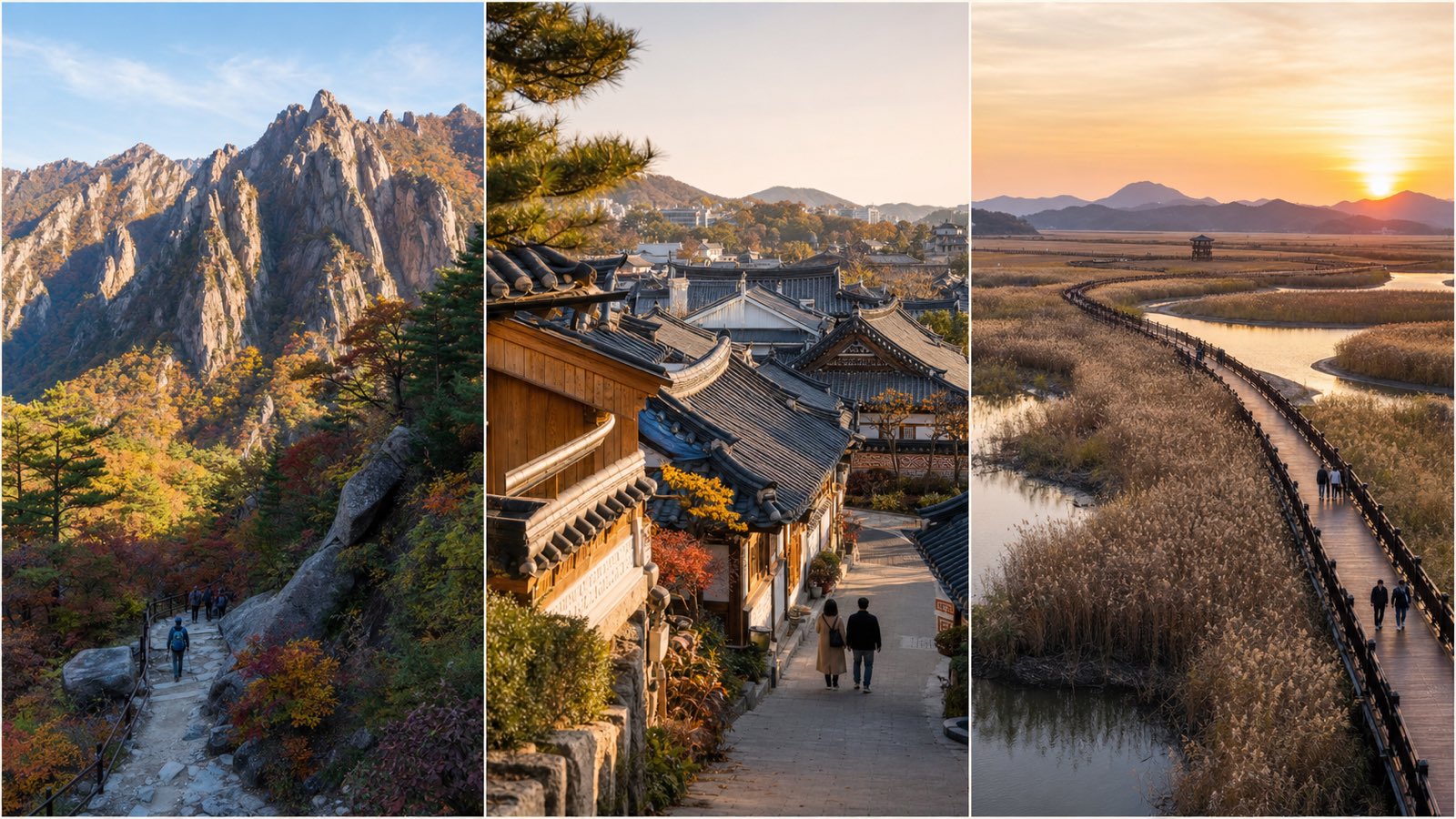
5. Suwon: the easiest heritage day outside Seoul
Choose Suwon when you want a full fortress walk and UNESCO heritage without moving hotels. Hwaseong Fortress has gates, walls and more than 40 structures spread around the old center. It is more than a single photo stop, so decide whether the wall walk, palace, archery experience or food market matters most.
Planning warning: the fortress is not immediately outside Suwon Station. Use 수원화성 or the exact gate as the final destination and allow a local bus or taxi leg.
6. Paju DMZ: a history-focused guided day
Choose the Paju DMZ if understanding modern Korean history is central to the trip. Imjingak and authorized DMZ tour routes can include different sites depending on security conditions and operating rules.
Planning warning: do not treat “DMZ tour” as one fixed product. Identification requirements, nationalities served, access points, cancellations and included stops can change. Compare the current authorized itinerary and cancellation terms before paying, and carry the exact identification the operator requires.
Before paying, use the DMZ passport, ID and closure checklist for foreign visitors to separate the standard Paju route from JSA expectations and avoid arriving with an unusable document copy.
7. Sokcho and Seoraksan: the clearest mountain add-on
Choose Sokcho and Seoraksan for hiking, dramatic granite scenery and an East Coast food stop. The official tourism shortlist includes both Seoraksan National Park and Sokcho Tourist Fish Market, which makes Sokcho a useful base rather than merely a bus transfer.
Planning warning: trail access, weather, autumn congestion and cable-car operations can change. Check the national park notice close to the visit and keep a low-altitude alternative for bad weather. One night works for a focused park visit; two gives a better weather margin.
8. Jeonju: the food-and-hanok overnight
Choose Jeonju when regional food, hanok architecture and traditional crafts matter more than adding another large city. Jeonju Hanok Village contains hundreds of hanok buildings plus Gyeonggijeon, lanes, cultural workshops and extensive food options.
Planning warning: the core is busy during peak weekends and is not beside the rail station. An overnight gives you early morning and evening hours, when the village feels different from the busiest midday period. Confirm current visitor information through Visit Jeonju.
9. Gangneung: the easier East Coast city break
Choose Gangneung when you want an East Coast beach, cafés and a direct rail-based break without building the trip around a mountain hike. Gyeongpo, Anmok and the Jeongdongjin coast each create a different visit, so save exact pins before choosing a hotel.
Planning warning: Gangneung and Sokcho are not interchangeable. Choose Gangneung for the easier rail-and-coast city break; choose Sokcho when Seoraksan is the reason for traveling. Combining both can work on a longer East Coast route, but it is unnecessary in a crowded first-week itinerary.
10. Suncheon and Yeosu: the southern nature-and-coast pair
Choose Suncheon and Yeosu when wetlands, gardens and a southern coastal city appeal more than another palace or shopping district. Suncheonman National Garden and Suncheonman Wetland form the nature anchor; Yeosu adds harbors, islands and the Expo coast.
Planning warning: this is a two-city combination. Treat two nights as a rushed outline and three as a better starting point. Check opening conditions and sunset timing for the wetland, then decide whether the trip continues toward Busan or returns north.
How many places fit into your trip?
| Trip length | Balanced first-trip shape | What not to force |
|---|---|---|
| 5 days | Seoul, plus Suwon or one organized DMZ day | A second hotel base after a long-haul arrival |
| 7 days | Seoul + Busan, or Seoul + Gyeongju + Busan | Adding Jeju merely to collect the island |
| 10 days | Seoul + Gyeongju + Busan, or Seoul + Jeju with a day trip | Three distant regions with no disruption buffer |
| 14 days | Seoul + Gyeongju + Busan + Jeju, or a slower mainland route with two specialist add-ons | Changing hotels every night |
A transfer day is still part of the trip. Count airport formalities, the trip to the station, hotel checkout, luggage storage and the final local bus—not only the fastest train or flight segment. When the international arrival and onward ticket are separate, give the first connection enough room to fail without destroying the itinerary.
Choose by season, then verify close to travel
- Spring: Seoul, Gyeongju and Jeonju pair urban walking with seasonal flowers, but bloom timing changes every year.
- Summer: Busan and Jeju offer coast-focused trips, while heat, humidity, rain and typhoons can change outdoor plans.
- Autumn: Seoraksan, Gangneung and Gyeongju are strong landscape-and-heritage combinations; peak foliage also brings demand and congestion.
- Winter: Seoul and Busan are easier to build around indoor alternatives. Mountain conditions require appropriate equipment and live checks.
Do not book a nonrefundable attraction because a blog names a “best month.” Use the seasonal idea to build the route, then verify the forecast, closure notice, reservation requirement and holiday calendar with the official operator.
Turn the shortlist into a bookable route
- Pin the must-do experiences. Five saved places in one city tell you more than the city name alone.
- Group them by geography. A coastal Busan hotel and a central-market itinerary create a different trip from a Haeundae-only plan.
- Choose the lodging zone before the ticket. This is especially important in Seoul, Busan and Jeju.
- Check the actual station or airport. Read the Korean station-name traps before purchasing rail.
- Buy through the operator. Use the foreigner KTX booking guide for Busan, Gyeongju and other rail stops.
- Save Korean place names. Follow the Korean-address search workflow when an English result is ambiguous.
- Keep one flexible block. Weather and fatigue are part of itinerary design, not personal failure.
Frequently asked questions
What are the best places to visit in South Korea on a first trip?
Start with Seoul, then add Busan for a coastal city, Gyeongju for history or Jeju for nature. Add Suwon, the DMZ, Seoraksan, Jeonju, Gangneung, or Suncheon and Yeosu only when that experience is a clear priority.
How many destinations should I include in seven days?
Usually two hotel bases, or three only when the route is efficient. Seoul plus Busan is straightforward; Seoul, Gyeongju and Busan can work because Gyeongju lies on the southeastern rail corridor. Jeju introduces another airport process.
Should I add Busan, Gyeongju or Jeju after Seoul?
Choose Busan for the broadest city contrast, Gyeongju for a shorter heritage stop, and Jeju when landscapes justify at least three nights and a flight. Compare the three in the dedicated regional guide.
Do I need to rent a car?
No for Seoul, Busan, Gyeongju, Suwon, Jeonju or most intercity combinations. A car can make a dispersed Jeju or rural itinerary easier, but legal licence eligibility, insurance and the rental company’s additional requirements must be confirmed before booking.
Which destination is best for history, beaches, food or hiking?
Choose Gyeongju for concentrated heritage, Busan or Jeju for coast, Seoul or Jeonju for a food-led plan, Gangneung for an easy East Coast break, and Seoraksan for a mountain-focused trip. Every destination has overlap; choose by the experience that would disappoint you most to miss.
Can I see Seoul, Busan and Jeju in one week?
It is possible on paper but usually produces two major transfers and little recovery time. For seven days, choose Busan or Jeju after Seoul. Save all three for a longer trip or a return visit.
Official sources
- Korea Tourism Organization: finalized 2025 Foreign Tourist Survey
- Ministry of Culture, Sports and Tourism and KTO: 100 Must-Visit Tourist Spots of Korea
- Busan Metropolitan City: Visit Busan
- Jeju Tourism Organization: Visit Jeju
- Gyeongju City: official English tourism portal
- Jeonju City: official English tourism portal
Can Seoul, Busan and Jeju fit?
Before adding all three, use the 10-day Korea itinerary test to count transfer days and decide what to cut.
Update history: first evidence-led edition prepared July 21, 2026. Recheck seasonal conditions, security-area access, park closures, attraction reservations and operator schedules immediately before travel.