Short answer: Korea subway etiquette is easiest when you protect the boarding path. Queue beside the door markings, let everyone exit, then board without stopping in the doorway. Keep bags close, use earphones and leave designated seats available unless you need them. The signs at your station and the operator’s crowd-control instructions always override a general rule.
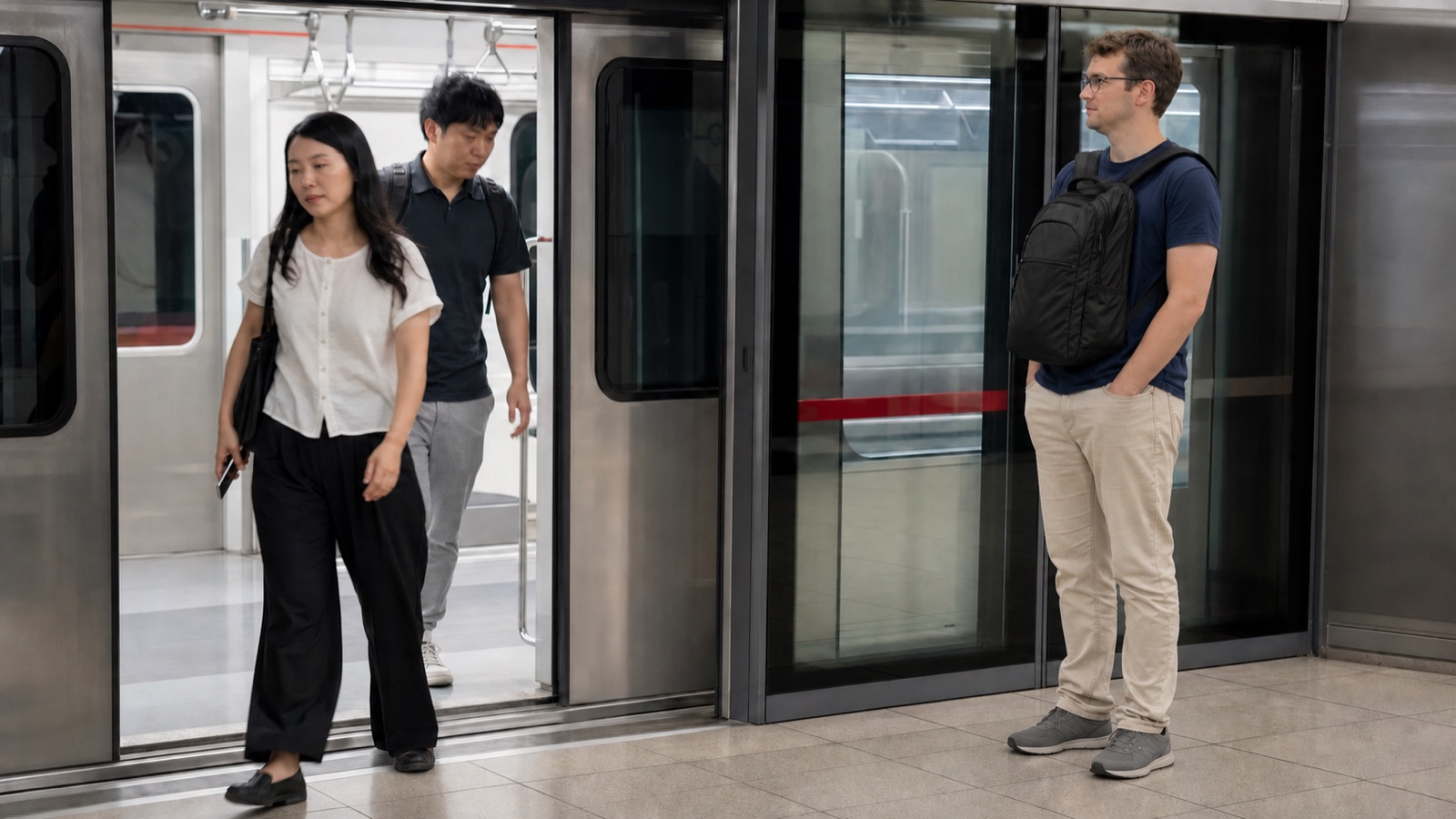
Board without blocking anyone
- Stand beside the door position. Platform arrows usually place boarding lines on either side and leave the center open.
- Let passengers exit completely. Do not begin boarding when someone is still moving through the center.
- Move inside the carriage. If space is available, clear the doorway. When you must stand near it, step out briefly at a station so others can leave, then re-enter after the flow.
- Prepare before your stop. Move toward the door without pushing and keep your card ready for the gate.
At a crowded interchange, staff may close a staircase, form a different queue or hold passengers temporarily. Follow the live direction instead of trying to reach the route shown by an app. To identify the correct line, exit and last connection, use the Seoul subway and map-app guide.
Understand priority seats and pink seats
| Seat | Who it serves | Safest visitor action |
|---|---|---|
| 교통약자석 Priority seating |
Older adults, people with disabilities, injuries or illness, pregnant passengers, adults with infants and others with reduced mobility | Leave it available if you do not need it; use it if you genuinely do |
| 임산부 배려석 Pink pregnancy seat |
Pregnant passengers, including early pregnancy that may not be visible | Leave it open unless you are pregnant |
| Ordinary seat | Any passenger | Offer it when someone appears to need it more, without demanding proof |
Do not confront another passenger because they look young or healthy. A disability, illness, injury or pregnancy may be invisible. A pregnant visitor may use a pregnancy seat; the official description is based on pregnancy, not nationality. Seat colors and arrangements vary outside Seoul, so read the symbol in front of you.
Manage luggage, sound and escalators
- Backpacks: carry a large pack in front or place it between your feet when crowded. Check that it does not swing into another rider.
- Suitcases: keep the case beside you, not across the aisle, door or wheelchair space. Do not leave luggage at the opposite end of the carriage.
- Phones: use earphones for music and video. Keep necessary calls brief and quiet rather than using speakerphone.
- Food: avoid eating a meal in the carriage. Seal drinks and anything that can spill or smell strongly before entering a crowd.
- Escalators: hold the handrail and stand inside the safety line. Current safety guidance promotes standing rather than treating one side as a permanent walking lane.
- Elevators: let riders exit, then give practical priority to wheelchair users, people with strollers, older adults, pregnant passengers and injured travelers.
Traveling with a large suitcase? Store it before a long sightseeing stop. The Seoul subway locker location guide explains how to match the locker bank with the correct floor and exit.
Fix the common tourist mistakes
- You stood in the exit path: step behind the side queue and let the center clear.
- Your bag hit someone: bring it in front, say “죄송합니다” (Joesonghamnida) and create space.
- You entered the wrong car: do not push back out as the doors close. Leave at the next station and change safely.
- The gate rejects your card: move aside so the queue can pass and use the staffed gate. The T-money and Climate Card guide covers fare-card problems.
- You are unsure about a seat: choose an ordinary seat or stand. Never ask another rider to prove eligibility.
Rush-hour etiquette starts before the platform. Finish setting the route while standing against a wall, not at the top of stairs or immediately outside a gate. On a moving train, hold a rail and remove a large backpack before it swings. If your group becomes separated, meet at a named exit after leaving the platform rather than holding a closing door.
Eating, makeup, conversation and seat use are often discussed online as if one strict national code exists. Focus on measurable impact: do not create spills, strong sound, blocked space or unwanted contact. A quiet action that does not affect another rider rarely needs a confrontation.
If another passenger drops an item, point it out or hand it to station staff. For property left on a train, note the line, direction, car number and time before using the operator’s lost-property process.
Frequently asked questions
Can a tourist use a priority seat?
Yes, when the tourist genuinely needs priority seating. Nationality is irrelevant. If you do not need it, leave it available.
Should I stand on the right side of an escalator?
Do not treat either side as a guaranteed walking lane. Stand inside the line, hold the handrail and follow on-site directions.
Can I take a call on the subway?
A brief quiet call may be unavoidable, but earphones and text are more considerate. Do not use speakerphone.
Official sources
- Visit Seoul: public transportation etiquette
- Seoul Metropolitan Government: subway earphone campaign
- Ministry of the Interior and Safety: escalator standing guidance
- Korean Law Information Center: transport-vulnerable passengers
Last verified September 2, 2026. Seat design and operating instructions vary by city and rail operator; follow the sign and staff at the station.