Short answer: Korea hiking can be as easy as a two-hour city-wall walk or as demanding as an all-day national-park summit. Choose the route by terrain and daylight—not only distance—check the official trail status on the same day, and carry water, a charged phone and shoes with reliable grip.
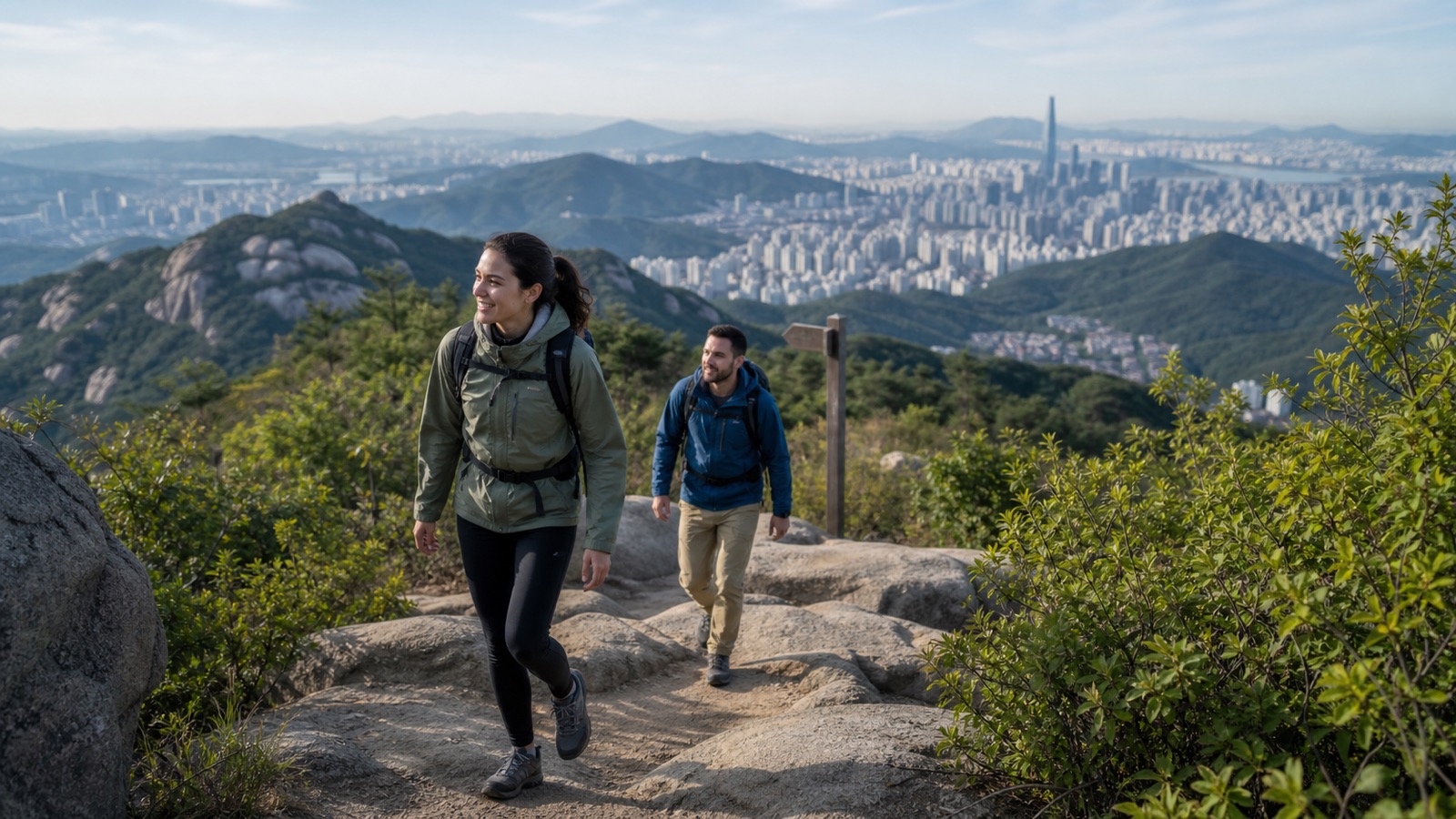
A mountain inside a city is still a mountain.
Granite can be slippery, summit routes can be steep, and sunset arrives quickly behind a ridge. Turn around when weather, ice, heat, fatigue or the remaining daylight makes the plan unsafe.
1. Choose your Korea hiking level
For a first Korea hiking day, separate three levels:
- Easy urban walk: paved paths, frequent exits and under two hours, such as parts of Naksan or Namsan.
- Moderate mountain route: uneven stone, stairs and sustained climbing, such as many Inwangsan or Gwanaksan courses.
- Hard summit route: long distance, exposed granite, seasonal controls or strict turnaround times, such as Baegundae, Ulsanbawi or Hallasan’s summit courses.
Korea Tourism Organization’s route guides use both time and difficulty. Add transport from your hotel, rest stops and the descent. A four-hour trail can consume most of a winter day once transfers and early darkness are included.
2. Seven useful Korea hiking choices
| Route | Best for | Main caution |
|---|---|---|
| Naksan City Wall | Easy historic Seoul walk | Steps and shared paths |
| Namsan | Flexible skyline walk | Busy paths and heat |
| Inwangsan | Shorter granite views | Exposed rock and closures |
| Gwanaksan | Moderate Seoul mountain day | Choose the correct branch trail |
| Bukhansan | Classic national-park scenery | Steep, crowded summit sections |
| Seoraksan | Major mountain landscapes | Long transfers and seasonal controls |
| Hallasan | Jeju summit objective | Entry times and reservation rules |
Naksan and Namsan are the easiest additions to a Seoul itinerary. Inwangsan gives a more mountain-like experience close to the center. Gwanaksan and Bukhansan require more route judgment. Seoraksan and Hallasan should be treated as separate destination days rather than casual gaps between city attractions.
3. Check the exact trail, not just the mountain
A mountain name is not a route. Bukhansan, Seoraksan and Hallasan each have trails with very different length, surface and access rules. Save the Korean trailhead name and the return route before leaving. Use the Korea Google Maps guide for what works, then confirm Korean place names with the NAVER Map address workflow.
For national parks, check Korea National Park Service notices for closures, entry controls and reservation sections. Rockfall, wildfire prevention, heavy rain and winter conditions can close only part of a route. An old itinerary showing an open summit is not evidence that it is open today.
4. What to wear and carry
A sensible Korea hiking daypack includes:
- shoes with tread rather than smooth city soles;
- water and a compact snack;
- a light layer and rain protection;
- sun protection in exposed seasons;
- a charged phone and small power bank;
- the trailhead, route and emergency details saved offline;
- any personal medicine you may need.
Seoul Hiking Tourism Centers at Bukhansan, Bugaksan and Gwanaksan provide route information and hiking gear rentals. The official Seoul pages list items such as shoes, clothing, poles and backpacks, but stock, size, price and operating days can change. Reserve through the official center rather than planning around an unverified social post.
5. Transport and payment
Many Seoul trailheads combine subway and bus. Identify the return stop before climbing because the descent may finish on another side of the mountain. The Seoul subway and map-app guide covers route checks, while the T-money guide covers ordinary bus and subway payment.
For Seoraksan or another regional park, transport time can be longer than expected and the last practical connection may arrive well before a city visitor expects. Do not publish one fixed “last bus” into your personal plan. Recheck the current operator and local stop on the travel date.
6. Korea hiking etiquette
Stay on the marked trail, give uphill hikers room, keep music private, and carry all rubbish out. Do not block a summit or narrow stairway for photos. Many hikers greet each other, but conversation is optional. The wider Korea etiquette guide explains everyday public-space expectations.
Food at a rest point is normal, but wildlife should not be fed. Drones, fires, smoking and camping can be restricted by location. Follow the sign at the site even when another blog describes a different rule.
7. Weather, injuries and emergencies
Check rain, wind, temperature and air-quality conditions before a Korea hiking trip. Summer heat and humidity can make a moderate route exhausting. Rain makes polished rock dangerous. In winter, shaded sections may remain icy after city streets look dry.
For a minor problem, stop early and descend by the safest marked route. For a serious injury, lost person or immediate danger, call 119 and provide the mountain, trail name, nearest sign or location marker, direction of travel and phone number. Save the Korea emergency numbers and safety tools before the hike.
Korea hiking mistakes to avoid
- Choosing by distance alone: terrain and elevation matter.
- Starting late: official entry controls and sunset can end the plan.
- Following one map blindly: confirm signs and the official route notice.
- Wearing smooth shoes: granite and wet steps need grip.
- Planning only the ascent: keep time and energy for the descent.
- Ignoring a closure: never enter a closed section for a photo or shortcut.
Frequently asked questions
Is Korea hiking good for beginners?
Yes. Start with a short urban route such as Naksan or a gentle section of Namsan. Do not use a difficult summit route as the benchmark for all Korean hiking.
Can tourists rent hiking gear in Seoul?
Yes. Seoul Hiking Tourism Centers offer gear rental and multilingual information. Check the official site for the current branch, reservation, stock and opening day.
Do all Korean national-park trails need reservations?
No. Requirements vary by park, trail and season. Check the exact route in the national-park reservation system and current park notices.
Official sources
- Korea Tourism Organization: Seoul hikes for all levels
- Korea Tourism Organization: national-park hiking trails
- Seoul Metropolitan Government: hiking centers and gear rental
- Korea National Park Service reservation system
- Korea Tourism Organization: Hallasan trekking
Last verified August 12, 2026. Trail access, reservation periods, weather controls and center operations can change; check the official route on the day.