A Singapore–Korea red-eye saves a hotel night only when the traveler can use the morning it creates. Compare sleep, early check-in, baggage storage and airport transfer before choosing the overnight fare. Search ICN for Seoul and PUS for Busan, then price any backtracking.
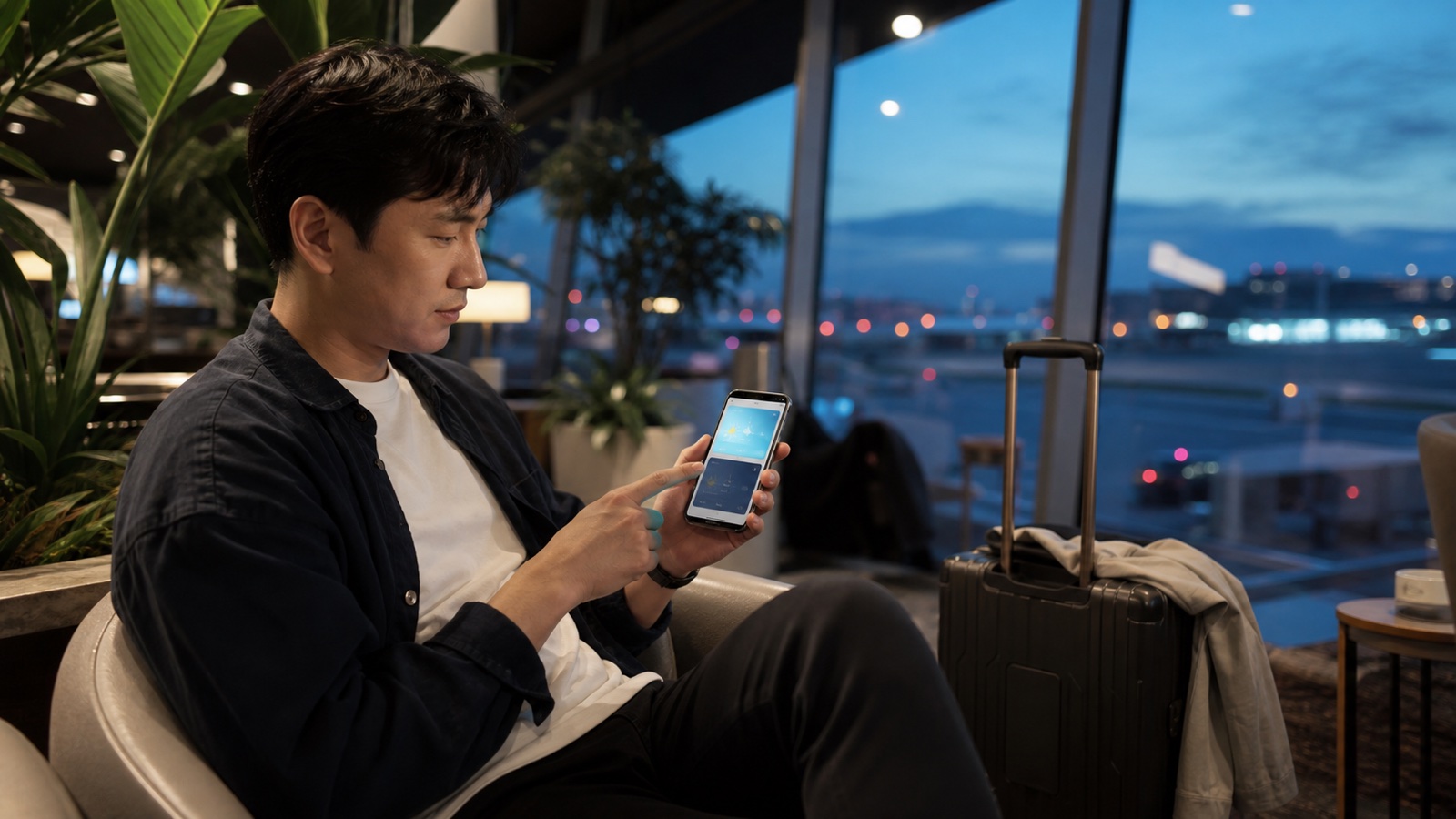
Best starting decision: Fly into the city that begins the itinerary when schedules are competitive; avoid landing at ICN only to spend the first day traveling to Busan.
- ICN is the main gateway for Seoul; PUS serves Busan.
- A red-eye needs an early-morning luggage and rest plan.
- Singapore passport holders must still check the dated 2026 official entry rules.
Make the decision in 60 seconds
| Your situation | Best move | Check before paying |
|---|---|---|
| Trip begins in Seoul | Search SIN–ICN first | Arrival time and hotel access |
| Trip begins in Busan | Compare SIN–PUS with ICN plus rail | Frequency, price and city transfer |
| Red-eye is much cheaper | Price early check-in or luggage storage | Sleep, showers and first reservation |
Choose Seoul or Busan before choosing the fare
Build the city order first. ICN suits a Seoul start; PUS can remove a rail day for a Busan start. If an open-jaw fare enters Seoul and leaves Busan—or the reverse—compare it with the cost of returning to the original airport.
A lower ICN fare may still win when the PUS schedule is poor, but include the Seoul-area transfer and train. Use the Incheon or Seoul to Busan guide to price the real alternative.
Treat red-eye timing as an itinerary decision
An overnight flight can arrive before standard hotel check-in. Ask the hotel about paid early check-in, guaranteed previous-night booking and luggage storage; these are different services. Do not assume a lobby can hold every bag at dawn.
Keep the arrival morning simple: breakfast, mobile setup, luggage, a neighborhood walk and rest. A timed palace, theme park or intercity ticket immediately after a sleepless flight creates unnecessary failure risk.
Check entry, phone and payment before leaving Changi
Use the official Visa Portal and 2026 K-ETA notice with the passport you will carry. K-ETA temporary exemption and visa-free eligibility are not the same concept. If an e-Arrival Card is required, use only the free official site within its permitted window.
Set up roaming, eSIM or SIM and download the hotel’s Korean address. Carry at least two payment methods and some cash backup. The Korea connectivity guide and cards and cash guide cover the main arrival failures.
Complete the airport-to-hotel route
For ICN, compare AREX, airport bus and taxi by the exact hotel, luggage and landing time. For PUS, use current Korea Airports Corporation transport information and allow for the distance to Haeundae, Seomyeon or Busan Station.
Save the last available public option and a taxi backup. Airline delay, immigration and baggage can move the journey past a planned train. Never rely on a future schedule screenshot without checking the official operator again.
Choose a day flight or overnight flight deliberately
An overnight flight may save a hotel night on paper but can create an exhausted arrival before the room is available. Ask whether you can sleep in the purchased seat, whether checked baggage and airport transport work at the scheduled hours, and what you will do with luggage until check-in. A daytime flight can cost more time but produce a safer first evening and a normal first night’s sleep.
Check the Korean arrival airport and terminal, because Seoul-area and Busan-area itineraries lead to different ground plans. If landing at Incheon, compare rail and bus hours against immigration and baggage time. Keep the first reservation flexible and avoid a long intercity transfer immediately after a sleepless flight unless the schedule has a generous recovery buffer.
Your final booking checklist
- Choose first and final city.
- Compare ICN and PUS totals.
- Price red-eye recovery.
- Check 2026 entry status.
- Submit only the official e-Arrival Card.
- Set up mobile data.
- Save hotel address in Korean.
- Plan airport transport by landing time.
Mistakes that cost time or money
- Landing at ICN for a Busan-first trip without pricing the transfer.
- Calling luggage storage early check-in.
- Booking a timed attraction after a red-eye.
- Assuming a past K-ETA rule still applies.
Turn this guide into a real plan
Compare four totals where available: round-trip ICN, round-trip PUS, open-jaw ICN/PUS and ICN plus KTX. Add the arrival-night recovery cost and the final airport return.
Once the route wins, use the seven-day Seoul–Busan itinerary or three-day Busan plan instead of rebuilding the city sequence from scattered bookings.
Frequently asked questions
Should I fly from Singapore to Seoul or Busan?
Choose the city that begins the itinerary when fare and schedule are competitive. PUS can remove backtracking for a Busan-first trip.
Is a red-eye flight a good idea?
It can be, but price sleep, early check-in or luggage storage and keep the first morning flexible.
Do Singapore travelers need K-ETA in 2026?
Check the official dated K-ETA notice with the passport used for travel; exemption status and visa-free eligibility must be verified separately.
Official sources
Continue planning
Last verified August 24, 2026. Entry rules, fares, schedules, weather, insurance terms and operator policies can change. Recheck the linked official source before booking.