Tokyo–Seoul is short enough for airport transfers to matter more than flight time. Compare HND–GMP for city access when available, NRT or HND–ICN for schedule and fare, and a Busan flight when the trip starts in the southeast. Price both sides door to door.
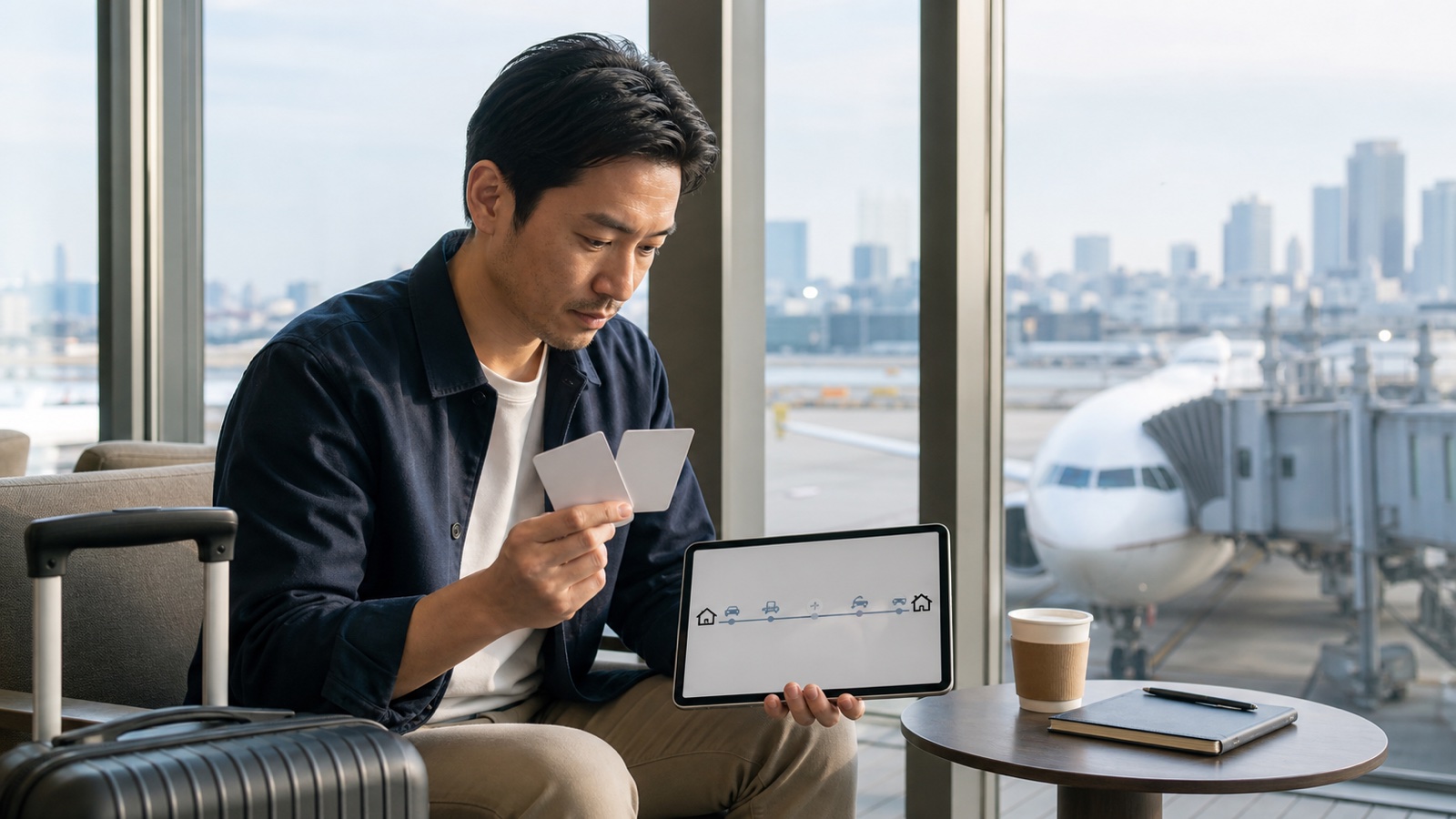
Best starting decision: Choose the airport pair with the lowest home-to-hotel burden, not the flight with the lowest displayed duration.
- HND and GMP can reduce city transfers.
- NRT and ICN may offer wider schedule or fare choice.
- A direct Busan arrival can remove a Seoul–Busan train.
Make the decision in 60 seconds
| Your situation | Best move | Check before paying |
|---|---|---|
| Central Tokyo to central Seoul | Compare HND–GMP first | Total fare, baggage and operating days |
| Fare or schedule priority | Compare NRT/HND to ICN | Ground transfer on both sides |
| Busan-first itinerary | Search Tokyo–PUS | International route and hotel transfer |
Compare both departure airports in Tokyo
Haneda is closer to central Tokyo for many travelers, while Narita may provide different fares and schedules. Add the trip from the Tokyo hotel, check-in time and baggage before calling one flight cheaper. An early Narita departure can require an airport hotel or difficult first train.
Read the operating airline and terminal. Low-cost and full-service fare families can include different baggage, seat and change conditions. A short international flight still has immigration and check-in requirements.
Choose the right Korea arrival airport
Gimpo can shorten the ride into Seoul; Incheon offers the broad main-hub network; PUS serves Busan. The ICN versus GMP guide compares Seoul access, while the airport guide explains PUS.
Do not search only “Tokyo to Seoul” and accept the first airport pair. Compare the hotel door-to-door time and whether the Korean itinerary later backtracks to another airport.
Use an open-jaw route for a two-country trip
If the wider journey includes Osaka, Fukuoka or another Japanese city, search different outbound and return airports. Tokyo to Seoul followed by Busan to Fukuoka can form a clean line, while returning to Tokyo only for a flight may erase a cheap fare.
Check whether separate tickets protect any connection. Leave an overnight or large buffer when a delay could destroy the next booking, especially around ferries or long-distance rail.
Finish Korea entry and arrival setup
Japanese travelers should check the 2026 official K-ETA notice and visa-free conditions with the actual passport. If an entry declaration is required, the official e-Arrival Card is free. Save the first hotel’s Korean address and arrival transport.
For a late ICN flight, compare last rail, bus and taxi. For GMP, confirm public transport and hotel check-in. For PUS, check the route to Busan Station, Seomyeon or Haeundae. Airport choice is complete only when the hotel can receive you.
Compare the two cities, not just the airfare
A Tokyo–Korea fare is only one leg of a four-part trip: Tokyo accommodation to departure airport, airport processing, flight, and Korean airport to the next accommodation. Compare Haneda and Narita access on the Japan side, then compare Incheon, Gimpo or a regional Korean airport on the arrival side. The lowest fare can lose its advantage through two long airport transfers.
If the flight is part of a larger Japan–Korea itinerary, keep ticket, baggage and immigration assumptions separate. A low-cost carrier may sell a different baggage allowance than the previous airline. Confirm the permitted weight, dimensions, check-in cutoff and terminal from the operating carrier. Leave time to repack after shopping rather than discovering an excess-baggage problem at the counter.
Check the arrival clock against Korean ground transport, not the flight duration alone. A late landing can turn an efficient airport choice into a limited bus or train schedule. Save one daytime route and one late-arrival fallback, including the Korean hotel address, before leaving Tokyo.
Your final booking checklist
- Compare HND and NRT access.
- Compare GMP, ICN and PUS.
- Read operating airline and terminal.
- Price baggage and seat.
- Check entry status.
- Save first hotel address.
- Plan late arrival.
- Protect separate onward tickets.
Mistakes that cost time or money
- Comparing only flight duration.
- Ignoring Narita or Incheon ground time.
- Flying into Seoul for a Busan-first route by habit.
- Building a tight connection between separate tickets.
Turn this guide into a real plan
Calculate four times: Tokyo hotel to airport, check-in buffer, flight and Korea airport to hotel. Add total fare and baggage. The pair that wins those five fields is the practical choice.
Then connect the route to the five-day Seoul plan or three-day Busan plan.
Frequently asked questions
Is Gimpo better than Incheon from Tokyo?
Gimpo often reduces Seoul ground time, but Incheon may have a better fare or schedule. Compare total door-to-door cost.
Should I fly from Haneda or Narita?
Choose by your Tokyo location, departure time, fare, baggage and Korea arrival airport rather than assuming one always wins.
Can I fly directly to Busan?
Routes and schedules change. Search PUS and verify the current operating airline when Busan is the first destination.
Official sources
- Korea Airports Corporation
- Gimpo Airport information
- Incheon flight information
- Official 2026 K-ETA notice
Continue planning
Last verified August 24, 2026. Entry rules, fares, schedules, weather, insurance terms and operator policies can change. Recheck the linked official source before booking.