There is no single best month for Korea—only the month whose downside you can accept. Choose spring or fall for long walking days, summer for beaches despite heat and rain, and winter for snow or lower seasonal costs despite serious cold. Then check live forecasts before packing.
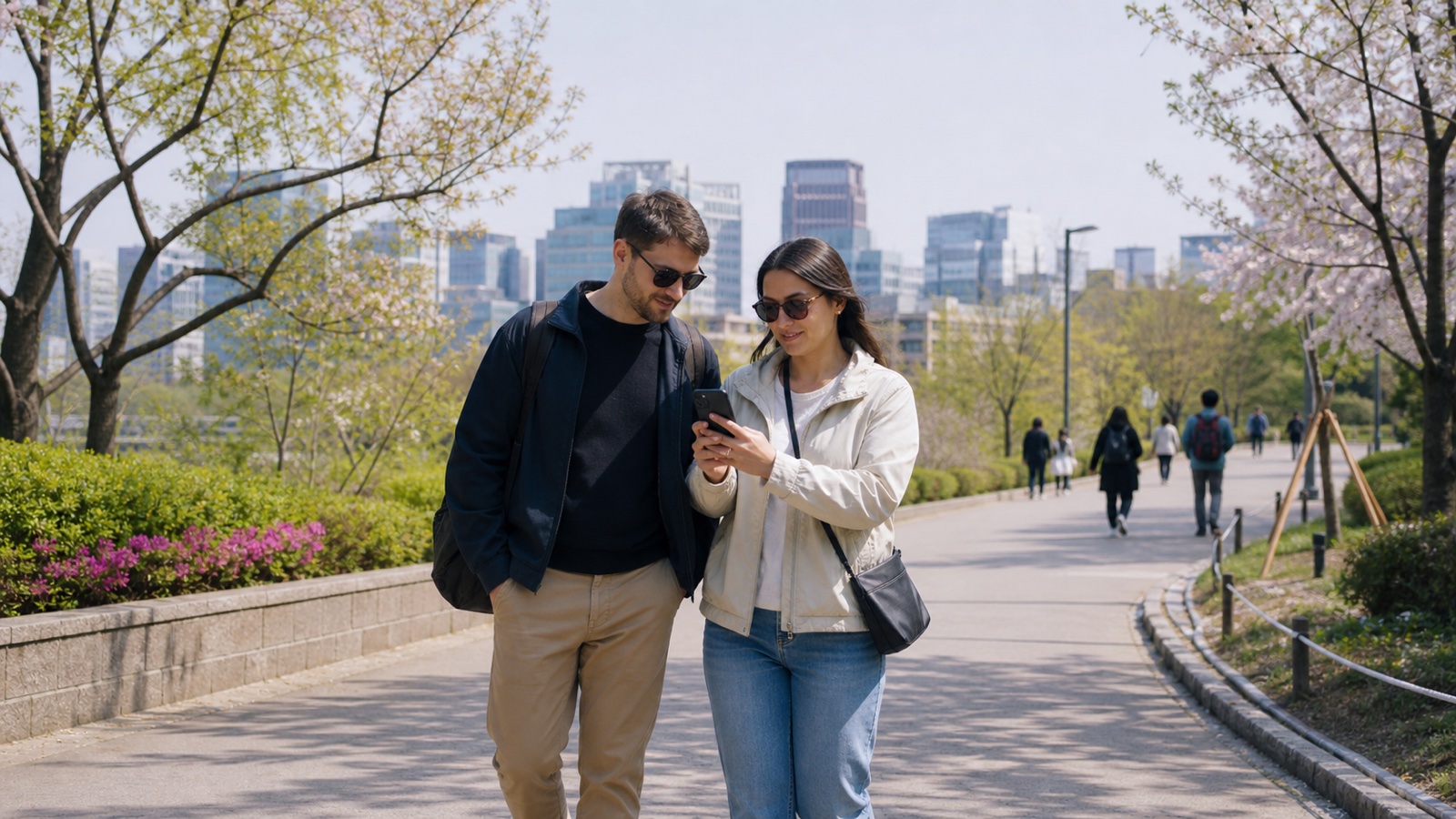
Best starting decision: For a first walking-heavy trip, target April–May or October–early November, but book flexible dates because blossoms, foliage and weather do not follow a guarantee.
- Spring and fall usually suit outdoor sightseeing.
- Late June through July overlaps the main rainy period.
- Late July and August can be very hot and humid.
- Winter rewards cold-ready travelers with snow activities and indoor culture.
Make the decision in 60 seconds
| Your situation | Best move | Check before paying |
|---|---|---|
| You want comfortable city walking | Spring or fall | Holiday weekends and blossom or foliage crowds |
| You want beaches and long daylight | Summer | Heavy rain, typhoon alerts, heat and humidity |
| You want snow or ski activities | Winter | Cold waves, shorter daylight and mountain conditions |
January to March: cold value and an uneven spring
January and February are winter months. Seoul and inland regions can fall below freezing, while Busan and Jeju are generally milder but not warm beach destinations. Choose this period for skiing, snow scenery, hot springs and fewer outdoor crowds. The tradeoff is cold wind, dry air and weather-related disruption.
March is a transition, not guaranteed spring. Early March can still feel wintry, and the official climate guide warns that chilly conditions can continue until mid-month. If blossoms are the main goal, flexible bookings are more useful than a date copied from a past year.
April to June: flowers, walking weather and rising humidity
April and May are strong first-trip choices because days are usually easier for palaces, neighborhoods and hikes. They are also popular, especially around blossoms and public holidays. Reserve limited accommodation and attraction slots early, but avoid paying a premium solely for a predicted bloom date.
June begins warm and can become humid. Korea Tourism Organization notes that the rainy season partly overlaps late June through late July. Early June can work well for city and coast travel, while later dates need a rain plan and flexible outdoor schedule.
July to September: heat, rain and a changing shoulder season
July is shaped by humidity and heavy rain risk. Late July through August can be extremely hot, and the June–October period can bring typhoons. Summer is still the right choice for beach travelers, festivals and people comfortable starting early, resting indoors at midday and checking alerts.
September is a transition. Heat can linger early, while later weeks often become better for walking. Major holidays can change transport demand and business hours. Use the Korea Meteorological Administration forecast for the actual trip rather than treating a seasonal average as a promise.
October to December: foliage, clear walks and early cold
October is one of the easiest months for a first visit: cooler walking weather, festivals and autumn scenery. That popularity can raise flight and hotel pressure. Foliage timing moves by region and elevation, so Seoul, national parks and Busan will not peak together.
November shifts from fall toward winter, especially inland. December brings cold, short days and holiday lighting. Choose late fall or winter when indoor museums, cafés, markets and shopping can carry the itinerary if weather changes.
Your final booking checklist
- Choose the trip goal before the month.
- Compare Seoul, Busan and Jeju—not one national forecast.
- Check Korean public holidays and school breaks.
- Use flexible bookings for blossoms and foliage.
- Build a rain or heat fallback day.
- Check KMA forecasts before each intercity move.
- Pack layers instead of one seasonal stereotype.
- Recheck outdoor attraction operations.
Mistakes that cost time or money
- Calling blossom or foliage dates guaranteed.
- Planning eight outdoor hours in midsummer.
- Packing for Seoul when most nights are in Busan or Jeju.
- Using a monthly average instead of a live warning.
Turn this guide into a real plan
Pick two candidate windows and write the downside of each. For example: “late April—higher blossom demand” versus “late October—cooler nights and foliage demand.” Choose the downside that affects you less, then compare refundable air and hotel options.
After dates are selected, use the Korea weather and packing guide for clothing, then choose destinations with the first-trip Korea shortlist.
Frequently asked questions
What is the best month to visit Korea?
April, May, October and early November are often comfortable for walking, but the best month depends on weather tolerance, crowd sensitivity and trip goals.
When is Korea’s rainy season?
The official tourism climate guide says the main rainy period partly overlaps late June through late July. Check live forecasts and warnings.
Is August a bad time for Korea?
It is hot and humid with heavy-rain or typhoon risk, but it can work for beaches, indoor attractions and travelers who plan around midday heat.
Official sources
Continue planning
Last verified August 24, 2026. Entry rules, fares, schedules, weather, insurance terms and operator policies can change. Recheck the linked official source before booking.