The item most travelers forget is not clothing—it is the information needed when the phone has no signal. Pack one offline arrival folder first, then documents, payment backups, power, weather layers, medication and comfortable walking gear. Leave space for purchases instead of bringing a second version of everything.
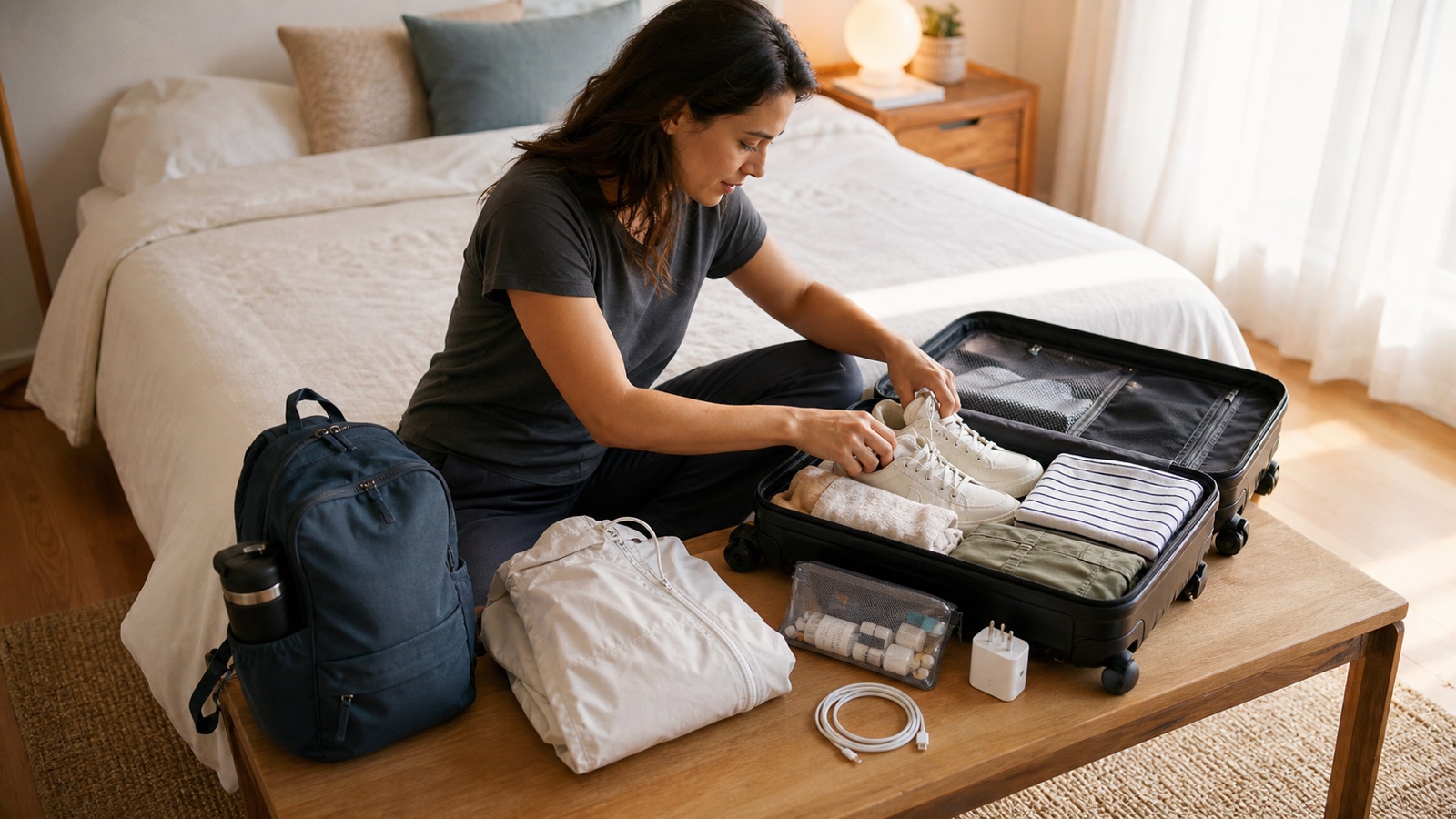
Best starting decision: Pack for the first six hours after landing without mobile data; everything else can be reduced around that test.
- Keep passport, approval, first hotel and airport route together.
- Korea uses 220V and Type C/F plugs.
- Pack climate layers from the live forecast, not a season label.
Make the decision in 60 seconds
| Your situation | Best move | Check before paying |
|---|---|---|
| Carry-on only | Use quick-dry layers and laundry | Airline liquid and battery rules |
| Checked bag | Keep essentials and one outfit in cabin | Baggage delay and weight limits |
| Shopping-heavy trip | Start with empty space | Return-airline and import limits |
Documents and offline arrival folder
Pack the passport used for every booking, required visa or K-ETA evidence, travel insurance, flight details, first hotel’s Korean address and onward ticket where relevant. The official e-Arrival Card is free and can be submitted within three days before arrival when required. Save its issue information and beware of imitation sites asking for payment.
Create one offline folder on the phone and one small paper note with the hotel, airport route and emergency contact. A cloud-only file is not useful before the SIM connects. Keep photocopies separate from the passport and never put every payment card in the same wallet.
- Passport and permitted backup copy
- Visa, K-ETA or e-Arrival information
- Flight and first-hotel confirmation
- Insurance and emergency contacts
- Offline Korean address and route
Phone, power and payment backups
Decide between eSIM, physical SIM and pocket WiFi before the flight. Download Naver Map or KakaoMap, translation tools, airline and rail apps, and offline confirmations. A small power bank is useful, but it must follow airline cabin-battery rules.
Korea uses 220V electricity and Type C/F sockets. Check every device input label before using a simple plug adapter; a plug shape does not convert voltage. Carry at least two payment methods and some emergency cash. The cards and cash guide explains common failure cases.
- Unlocked phone or confirmed roaming
- Charging cable and compliant power bank
- Correct plug adapter and voltage check
- Two cards stored separately
- Small cash reserve
Weather, walking and health
Use the month-by-month weather guide and then the live forecast. Pack a breathable base, adjustable mid-layer, season-appropriate outer layer and rain protection. Broken-in walking shoes are essential; Seoul days can combine stations, stairs, palaces and neighborhoods.
Bring required medication in original packaging with supporting documents where appropriate, and check Korean import rules through official authorities. Add sunscreen, basic personal items and a reusable bottle, but remember that pharmacies and convenience stores can replace ordinary consumables. Do not overpack “just in case” items that are easy to buy.
- Weather layers and compact rain protection
- Broken-in shoes and spare socks
- Prescription medication and documentation
- Basic sun and personal care
- Small day bag with secure closure
Luggage strategy for trains, stairs and shopping
Choose a bag you can handle on a station staircase without help. Wheels work well in airports and major stations but can be awkward on steep streets, traditional lodging entrances and crowded platforms. Keep one hand free for gates and railings.
Measure the return allowance before shopping. Cosmetics, food, batteries and liquids are governed by airline and destination-country rules in addition to Korean sales rules. Tax refund eligibility does not prove an item can enter your home country. Keep receipts organized and place fragile purchases where security inspection can access them.
Do a one-day luggage rehearsal
Pack the bag, carry it down stairs, open it in a small space and take out only what you need for one travel day. This rehearsal reveals whether the passport is buried, liquids leak, chargers tangle or the day bag has no room for a layer. If you cannot comfortably lift the main bag, remove items before assuming every station will have the right elevator.
Put the first-night essentials in one reachable section: medication, one change of clothes, charging cable, accommodation address and basic toiletries that comply with aviation rules. A delayed checked bag then becomes an inconvenience rather than an emergency. Photograph the packed contents and keep receipts for valuable items if your insurance claim rules require evidence.
Your final booking checklist
- Build the offline arrival folder.
- Separate passport and payment backups.
- Confirm phone is unlocked.
- Check every charger input voltage.
- Pack live-forecast layers.
- Use broken-in shoes.
- Verify medication and battery rules.
- Leave return-baggage space.
Mistakes that cost time or money
- Keeping every confirmation online only.
- Assuming a plug adapter changes voltage.
- Putting essential medication in checked baggage.
- Packing a suitcase you cannot lift on stairs.
Turn this guide into a real plan
Lay out the 25 items by function, not by outfit. Remove anything duplicated by the hotel, easy local purchase or another item. Then test whether the carry-on alone can support one night if the checked bag is delayed.
Finish with the Korea connectivity comparison, power-adapter check and entry checklist. Those three links solve more first-day problems than another pair of shoes.
Frequently asked questions
What plug adapter does Korea use?
Korea uses 220V and Type C/F sockets. Confirm the device voltage before using an adapter; adapters do not convert voltage.
Should I bring cash to Korea?
Bring a small backup and more than one card. Some transport top-ups, markets or payment failures still make cash useful.
Can I buy toiletries in Korea?
Yes, ordinary toiletries are widely available. Bring specialist, prescription or allergy-sensitive items you cannot easily substitute.
Official sources
Continue planning
Last verified August 24, 2026. Entry rules, fares, schedules, weather, insurance terms and operator policies can change. Recheck the linked official source before booking.