Packing for “Korea weather” fails because Seoul, Busan, Jeju and mountain areas can feel like different trips. Use the month as a starting layer, then adjust for the city, elevation and live forecast. Pack one system that can add warmth, shed heat and handle rain instead of chasing an exact long-range number.
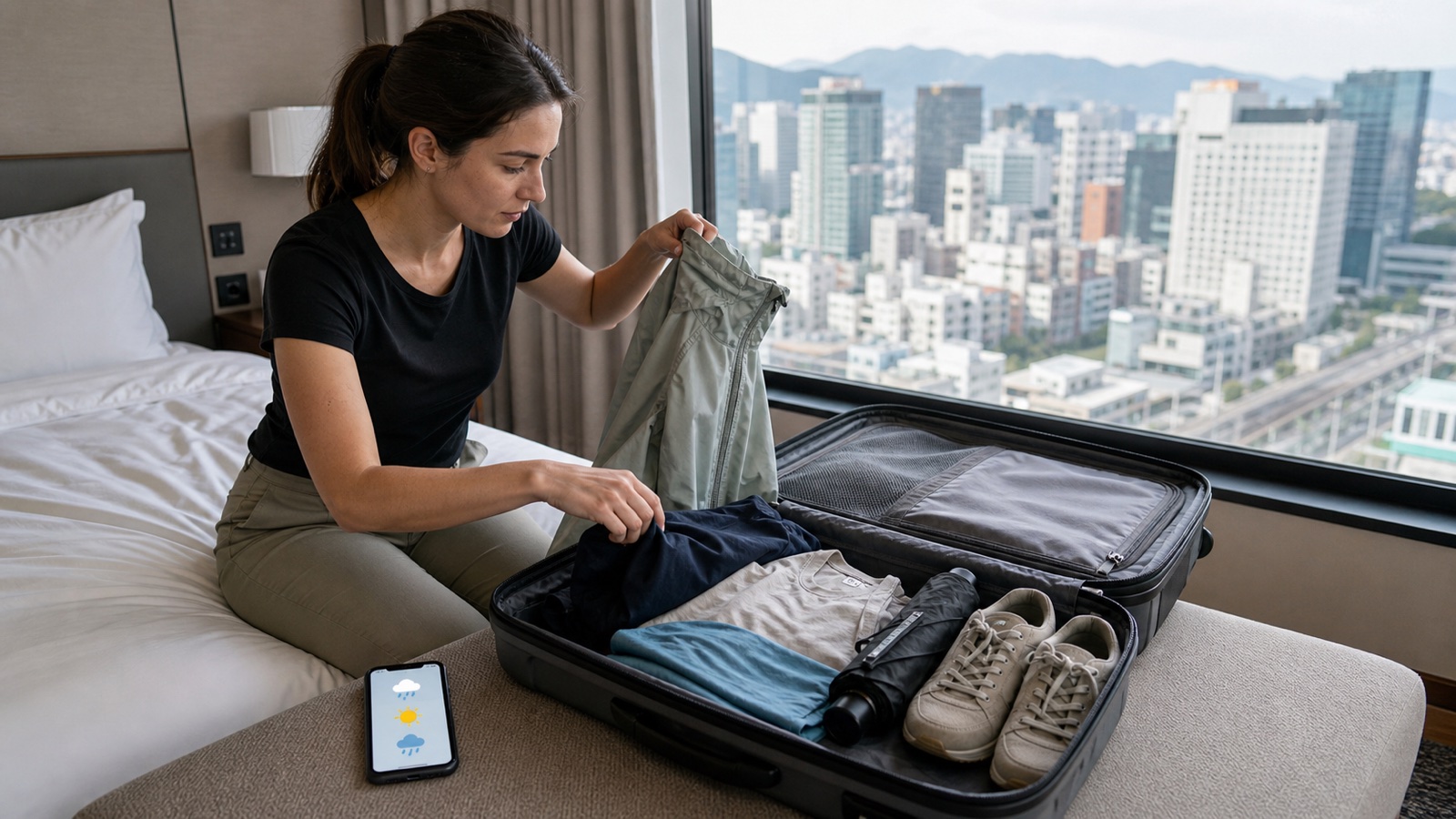
Best starting decision: Build around three layers plus weather protection: a breathable base, an adjustable mid-layer, season-appropriate outerwear and compact rain protection.
- January and February require real cold protection inland.
- Spring and fall need layers for large day-to-night changes.
- July and August need heat, humidity and heavy-rain planning.
Make the decision in 60 seconds
| Your situation | Best move | Check before paying |
|---|---|---|
| Mostly Seoul and inland cities | Pack for the colder forecast edge | Morning, night and wind chill |
| Mostly Busan or Jeju | Use coastal forecast and wind protection | Rain, ferry or flight disruption |
| Mixed cities and mountains | Pack modular layers | Elevation and trail conditions |
Winter packing: December, January and February
Winter is cold and dry, with inland temperatures often below freezing. Pack an insulated coat, warm base layer, gloves, hat, lip balm and shoes with traction. A fashionable light jacket is not a substitute for insulation when a cold wave arrives. Indoor heating can feel strong, so wear layers you can remove on trains and in cafés.
Snowfall varies by place and date. Do not pack only for a postcard snow scene. Check the forecast and trail or road status before a mountain day. A small moisturizer and reusable water bottle help with dry indoor air, while spare socks matter more than a second bulky coat.
Spring packing: March, April and May
March can switch between winter and spring. Bring a warm mid-layer and wind-resistant outer layer, especially for evenings. April is often comfortable for walking but can still be cool after sunset. May becomes warmer, yet a light layer remains useful in air-conditioned transport or after rain.
Flower season can increase walking and outdoor waiting. Comfortable broken-in shoes, allergy medication you are allowed to bring and a compact umbrella are more useful than a large photo outfit. Yellow-dust or fine-dust conditions can occur; use official air-quality information and adjust long outdoor plans when advised.
Summer packing: June, July and August
Pack breathable quick-dry clothing, sun protection, a refillable bottle and a lightweight rain shell. An umbrella helps with sun and rain but is not enough for wind-driven storms. Waterproof phone protection and a dry bag for passports are valuable during heavy rain.
Late June through July overlaps the main rainy period, while late July and August can be extremely hot and humid. Start outdoor days early, schedule museums or malls around midday and do not treat a packed itinerary as a test of endurance. Follow heat and typhoon alerts from the Korea Meteorological Administration.
Fall packing: September, October and November
September can still feel summery before cooler air settles in. October usually favors long walks, but mornings and nights can be noticeably cooler. November requires warmer layers and may feel wintry by the end of the month, especially inland or at elevation.
Use a light jacket, adjustable mid-layer and shoes suitable for leaf-covered or wet paths. Foliage trips often involve mountains where conditions differ from the city. Pack for the destination’s elevation, not the temperature shown for a downtown hotel.
Run a 48-hour weather check before departure
A monthly average cannot tell you whether your arrival afternoon will be wet, windy or unusually warm. Forty-eight hours before departure, check the Korea Meteorological Administration forecast for the first city and repeat the check whenever you change regions. Translate that forecast into actions: which layer goes in the day bag, whether shoes can dry overnight and whether an exposed attraction needs an indoor alternative.
Keep one small adjustment budget instead of packing for every theoretical condition. Korea’s major cities make it easy to buy an umbrella, basic layer or sunscreen if the forecast shifts. The useful packing goal is not perfect prediction; it is staying comfortable through the first day while leaving enough luggage space to adapt.
Your final booking checklist
- Check every overnight city, not only Seoul.
- Read the seven-day forecast before departure.
- Recheck warnings each morning.
- Pack broken-in walking shoes.
- Add one rain system and waterproof document storage.
- Carry removable layers for heated or cooled interiors.
- Check medication import rules.
- Leave space for purchases instead of overpacking.
Mistakes that cost time or money
- Packing one outfit for a seasonal average.
- Ignoring coastal wind or mountain elevation.
- Depending on a tiny umbrella in a storm.
- Wearing new shoes for a 20,000-step day.
Turn this guide into a real plan
Make a four-column packing note: base, mid-layer, outerwear and rain or sun protection. Fill it from the forecast for the coldest and wettest day, then remove duplicates. This creates a smaller bag with a wider comfort range.
Pair this guide with the Korea power adapter check and eSIM versus SIM guide. Weather preparation works only when your phone can receive warnings and your charging setup works.
Frequently asked questions
Does it snow everywhere in Korea in winter?
No. Snow varies by region, elevation and weather system. Check the live destination forecast rather than assuming a snowy city trip.
Do I need an umbrella in Korea?
A compact umbrella is useful, but add a rain shell and waterproof document storage in the rainy season or when strong wind is forecast.
Is September still hot in Korea?
It can be, especially early in the month. Later September is often more comfortable, but current forecasts should control packing.
Official sources
- VISITKOREA climate and seasonal guidance
- Korea Meteorological Administration
- Official Korea travel portal
Continue planning
- Choose the best time to visit Korea
- Check Korea power plugs and voltage
- Set up mobile data for weather alerts
Last verified August 24, 2026. Entry rules, fares, schedules, weather, insurance terms and operator policies can change. Recheck the linked official source before booking.